- 83% of spa operators surveyed need to invest
- Record deficits in municipal budgets hamper investment
- New offerings for the younger generation are intended to increase appeal
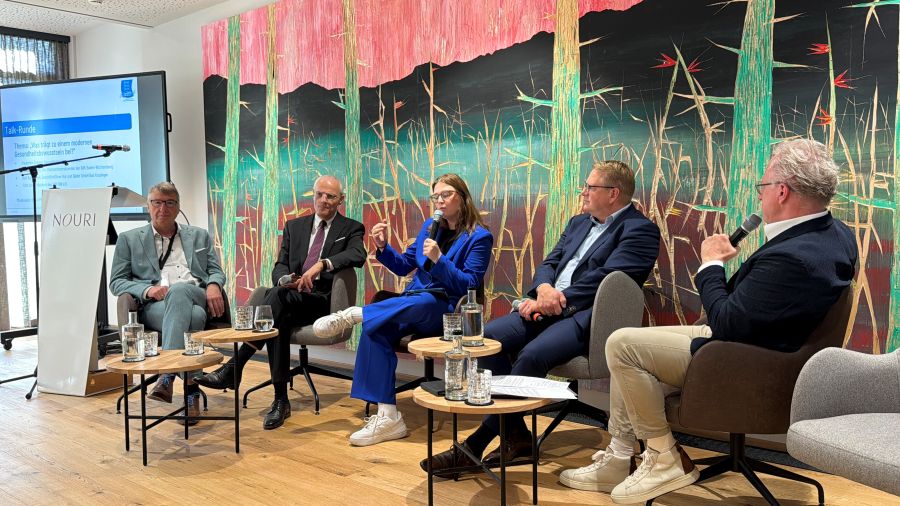
STUTTGART. Tourism continues to be of great economic importance to Baden-Württemberg's recreational and health destinations – but here too, erosion is threatening: operators estimate that the investment required to maintain the thermal spa infrastructure in health resorts and spas alone will amount to up to 130 million euros. “Money that is currently not available in the municipalities due to tight budgetary situations,” as Fritz Link, president of the Spa Association, emphasized at the 2025 Spa Day in Bad Krozingen. Link therefore considers it all the more important that funds from the federal government's infrastructure program flow “quickly and unbureaucratically” to the municipalities for the maintenance of the spa infrastructure. The president sees his association's facilities as a “seismograph of society: We address the issues of digitalization, prevention, and mental health services so as not to lose the younger generation and thus our customers of tomorrow.”
Countless studies prove it: today's 18- to 24-year-olds, also known as Generation Z, have a different understanding of health. These young people are “significantly more aware and reflective” in their focus on mental health, prevention, and work-life balance, explains health scientist Frederike Gramm at the Bädertag conference. The younger generation wants to have a say, help shape things, and be informed. These are all aspects that do not always correspond to the current understanding of patients or healthcare customers.
Industry wants to be a seismograph and trendsetter
This perception is widely shared within the industry, emphasized HBV President Fritz Link. Bad Krozingen and many other spas and health resorts in Baden-Württemberg have already made significant progress in terms of digitalization, e.g., in the area of social media marketing. “Our 54 spas and health resorts are also creative in the way they design their offerings” and are increasingly responding to the demands of young people in particular. “We want to consciously win over this target group,” emphasized Link, appealing at the same time to refocus on the natural strengths of the spas. The industry recognizes great potential in preventive measures and nature-based therapy offerings in particular—both of which are based on natural remedies that form the foundation of the spa and health resort industry.
"If young people are increasingly acknowledging the risks of mental illness and are significantly more willing to invest in disease prevention, then it is up to spas and health resorts to offer these people appropriate services that fit in with their lifestyle and offer solutions to their everyday problems. We are both seismographs and trendsetters because we develop such services professionally and represent them credibly." According to Link, this could range from mindfulness and healthy sleep services to stress resilience services.
The spas and health resorts received support from Alexander Stütz, Deputy Chairman of the Board of AOK Baden-Württemberg. He also welcomed the fact that parts of the younger generation are clearly placing greater emphasis on prevention again. “We would be delighted if our prevention services became even more popular in the future, as they have been proven to reduce the risk of illness and the need for costly therapies.” Stütz also sees a social aspect: “If we can reestablish a higher level of health awareness in our society as a whole—across all generations—it will also increase people's individual satisfaction,” the AOK board member is certain. This is because greater health awareness goes hand in hand with a more mindful lifestyle and an increase in personal well-being.
Intergenerational exchange
The question remains whether young and old generations get in each other's way in spas and health resorts due to their different lifestyles. “This problem has also been recognized,” says Fritz Link, and he is supported in this view by Alexander Stütz, Deputy Chairman of the Board of AOK Baden-Württemberg: “Baby boomers and representatives of Generation Z are already practicing intergenerational exchange and forming successful teams.” The key lies in promoting mutual understanding and appreciation of each other's work and life achievements.
Applied to spas and health resorts, this would mean that “we would make even more adjustments to our offerings to meet the needs of individual generations,” according to Fritz Link. “In terms of content, we are already in a position to do this. We can also bring this into line with the Social Security Code in order to have even more prevention courses recognized by the Central Prevention Agency.” This would enable close cooperation with statutory health insurance funds, thereby facilitating access to such services for all generations.

 EN
EN  DE
DE  FR
FR