• Prevention
  • Spas
  • Spas and health resorts
  • Clinics
    • On average, the human body consists of 67% water. It is therefore not surprising that water also plays a decisive role in terms of health.

      The beneficial warmth of moor, fango and mud was discovered early on. Mud baths were documented as a natural remedy as early as the 14th century.

      The climate has long had a major influence on well-being. Those seeking relaxation are most likely to find it in an environment with a balanced temperature and constant humidity.

      Kneipp cures are probably among the best-known water treatments. However, Kneipp therapy also includes nutrition, herbs, exercise and inner balance in addition to the water pillar.
  • Your way to a cure

News & Tips

Functional Drinks
Wellness drinks for everyday life

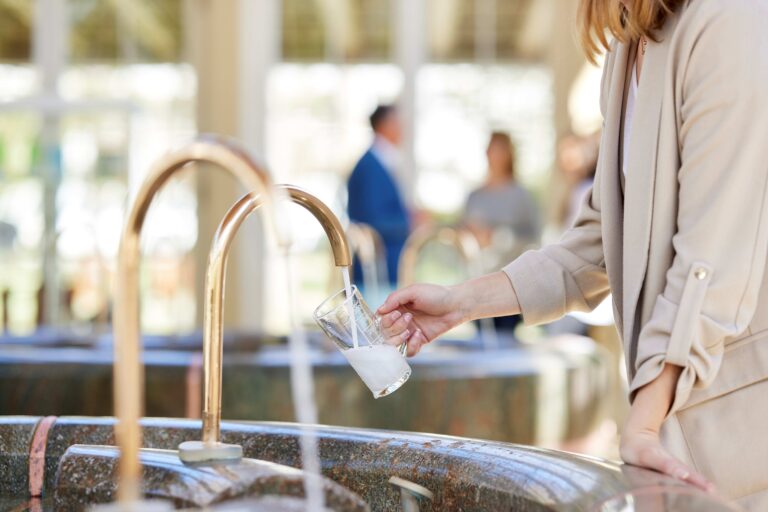
Woman filling a glass with natural healing water from a golden tap in the pump room of the Bad Mergentheim spa park – the classic functional drink straight from the source.

A warm matcha in the morning, a fermented drink after a walk, or an electrolyte drink after a hike: what we drink increasingly tells a story about how we want to live. Wellness drinks are the expression of a new awareness – somewhere between indulgence, health, and the search for small moments of calm.

It often begins with a small ritual: the water is heated, the fine matcha powder is carefully whisked, and the first sip is consciously enjoyed. Or a glass of Kombucha is opened, its slightly tart taste reminiscent of traditional fermentation. Perhaps it is also a drink after a hike designed to supply the body with fluids and minerals.

Drinks are no longer just a accompaniment to a meal. They are becoming the expression of a lifestyle. The desire for more mindfulness, healthy nutrition, and conscious breaks has created a new market: wellness drinks. They promise energy, balance, regeneration, or support for the skin and gut.

Yet behind the colorful bottles and modern formulations lies a crucial question: What remains of the trend when you take a closer look?

The new yearning for conscious moments

While in the past taste and refreshment were the main focus, many people today view beverages from a different perspective. They should fit one's own lifestyle – natural, high-quality, and ideally with an added benefit.

This change is particularly evident in the wellness sector. In thermal baths, hotels, and health resorts, high-quality beverage selections have long been part of the overall experience. An herbal tea after the sauna, a freshly prepared infused water, or a regional juice spritzer create small transitions between activity and relaxation.

The basis is deceptively simple: the body needs enough fluids. Water remains the most important component of a balanced fluid intake. The new wellness drinks target what many people are looking for today: the combination of enjoyment and conscious self-care. 

Five beverages that are shaping the wellness market:

Matcha: More than just a green pick-me-up

Hardly any drink embodies the modern wellness philosophy as strongly as matcha. The bright green powder from Japan stands for tranquility, concentration, and a mindful ritual. Unlike with classic green tea, the entire tea leaf is processed in matcha. As a result, various plant compounds and natural caffeine make their way into the drink. However, matcha derives its special significance not only from its ingredients. For many people, the preparation itself is a moment of deceleration—a short break in an often hectic daily routine. The trend shows that wellness sometimes doesn't begin with a grand program, but with a few mindful minutes.

What was once known primarily to lovers of fermented foods is now finding its place in cafés, supermarket shelves, and wellness offerings: kombucha. The fermented tea represents a development in which traditional manufacturing processes are being rediscovered. Many people are showing greater interest in natural processes and the importance of a diverse diet. The topic of gut health in particular has boosted the success of kombucha and similar beverages. The cultures they contain make fermented drinks interesting—yet they do not replace a balanced diet. After all, well-being does not come from a single product, but from the interplay of many factors.

Not every trend is aimed at everyday life. Electrolyte drinks show that the body's needs depend heavily on the situation. After intense exercise, long hikes, or extreme heat, the body loses fluids and minerals through sweat. In such moments, electrolytes can be a useful supplement. For the normal daily routine, however, water remains the first choice. The trend also shows that not every wellness product has to be consumed daily to be useful.

Collagen drinks are among the best-known products in the beauty and wellness sector. They are frequently advertised for promoting beautiful skin, healthy joints, or strong hair. Collagen is an important component of the human body. Scientific studies are examining the potential effects of specific collagen peptides. At the same time, the foundation for a healthy appearance continues to lie in nutrition, exercise, sleep, and adequate rest. The little shot in the morning can be a ritual, but it does not replace a holistic lifestyle.

Ashwagandha, ginseng, or reishi are increasingly appearing in modern wellness drinks. The plant compounds are traditionally associated with balance and stress regulation. Scientific research into individual effects is ongoing. At the same time, many claims found on packaging or in advertising have not yet been conclusively proven. Therefore, with these products in particular, it is worth taking a close look: origin, dosage, and ingredients are more important than big promises.

The Wellness Check: What Really Matters

The term „wellness“ is ubiquitous today. However, not every product with this label automatically offers a special added value. Anyone choosing a wellness drink should pay less attention to big promises and focus more on quality:

Less sugar.
Many supposedly healthy drinks contain more sweetness than expected.

Clear ingredients.
A short, understandable list of ingredients often speaks for a transparent product.

Realistic expectations.
A drink can help – but it cannot replace a healthy lifestyle.

ASSOCIATION

Spas and health resorts in Baden-Württemberg

en_USEN